Language:
Implementing sociocracy – a roadmap
You would like to start using sociocracy in your organization, but you don’t know how and where to start in your sociocracy implementation?
This page gives you an overview of how to go from learning about sociocracy to using it as an organization: implementation!
While the implementation process naturally depends on your starting point, some steps are – more or less – always the same.
Our quiz makes sure you hit all the benchmarks along the way.

The 3 phases of a sociocracy implementation
Phase 1
- Identify pain points
- Create legitimacy
- Mandate Implementation Circle
This phase is complete when an Implementation Circle has been formally empowered and mandated to work out a governance proposal.
Useful offerings:
- Attend a free info session.
- Share the Primer (75min) so people can learn on their own.
- Form study groups for deeper learning (8h)
- Book a 1.5 or 6h training for your members
Tip! Assess your “before” picture by taking our health check, and identify your weak spots, ideally via a comprehensive assessment.

Laying the groundwork for a sociocracy implementation
Realizing that the current governance structure isn’t what is desired and that implementing sociocracy has promise to improve the situation.
- Initiators learn about sociocracy and bring the idea back to the organization. They begin the conversation on what’s currently working and what tradeoffs the current system has and what changes could improve the situation.
- It matters how we begin. If those who initiate this move don’t have a lot of trust, the implementation will always be questioned. It’s important to loop in the current decision-makers and those who aren’t in leadership, so a move can be made together as peers.
- Once there is agreement that a governance redesign is needed, formally ask an implementation circle to design the specifics of how governance could look in the organization.
How long this phase takes depends on how much people are on the same page on what their view on the status quo is, how clearly legitimacy is coded right now and how openly conversations can be held.
Phase 2
- Define the aims, domains,
- Define and governance agreement with as many feedback loops as needed.
- Make an adoption plan
This phase is complete when there is a concrete proposal for adoption.
Useful offerings for this phase:
- Consulting support:
- the facilitation of the Implementation Circle
- your circle structure design.
- governance agreements
- leadership coaching
- beginner and facilitation training
- salary and HR policies as well as budgeting
- transition plans
- Free resources like templates for governance agreements and legal texts, such as bylaws.
- Products
- Work with our books Many Voices One Song and From Here To There.
- Send small groups through our video-led classes (introduction or intermediate facilitation level)
- Send 2-3 people from your Implementation Circle to the Sociocracy Academy to steep them in sociocracy as internal resources.
- Become an organization learner and get free access to some of our courses, discounts on your training and consulting, expanded library of templates, and access to Communities of Practice.
Designing the system
The Implementation Circle now works out a proposal – implementing sociocracy means designing and choosing a system. Designing the system often happens with significant back and forth between the Implementation Circle and the rest of the organization.
Design appropriate Q&A and feedback sessions. The new system should not be a surprise or elicit any strong form of resistance. Ideally, everyone transitions seamlessly and smoothly into the system.
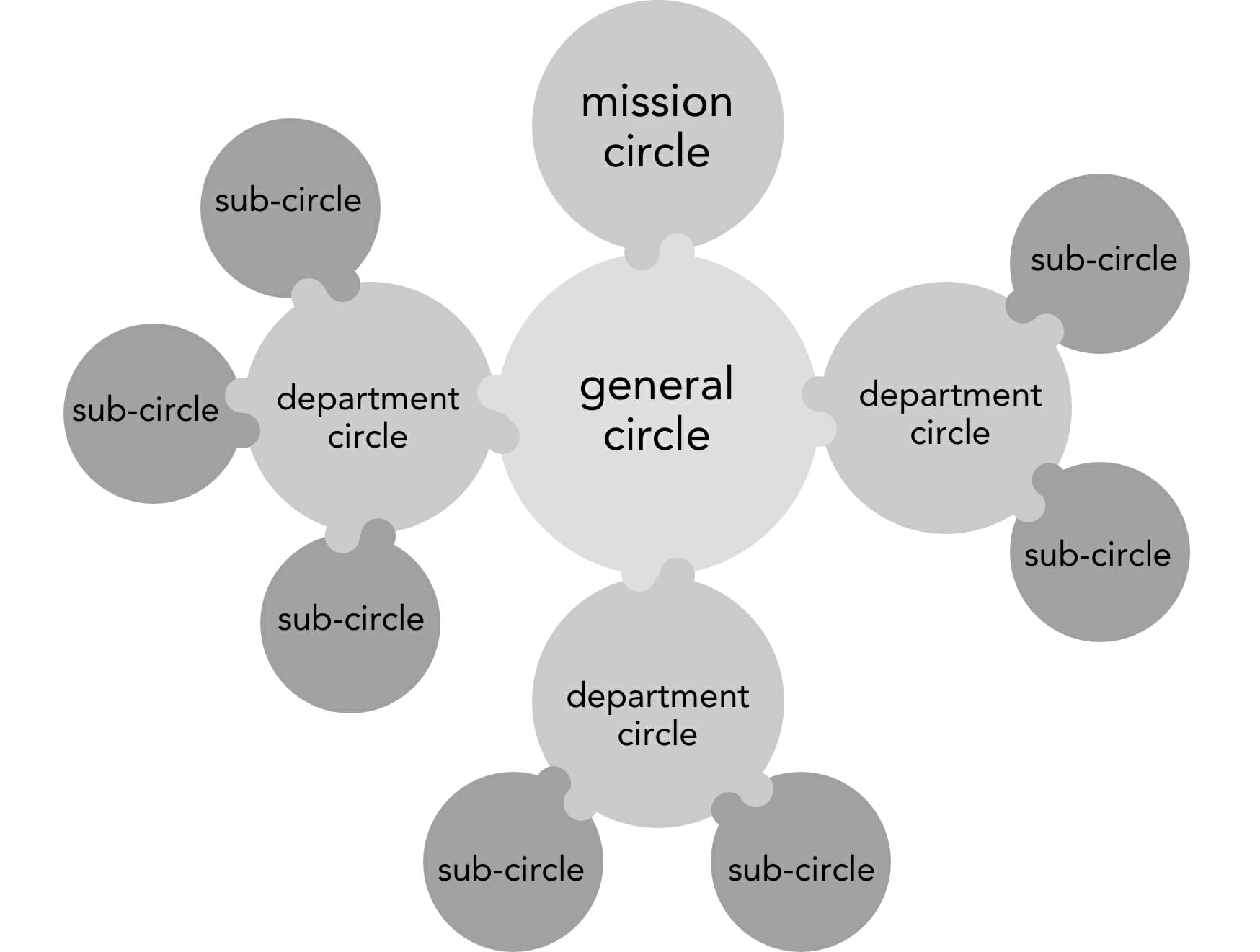
- Define the circle structure, including the aims/domains as well as key roles.
- Describe the governance system in a governance agreement (aka constitution). Harmonize with bylaws and legal documents.
- Understand how to accept the proposal (in the next phase) formally. Who can accept the new system? Work closely with those decision-makers, but also include everyone else.
- Work on power dynamics.
- Training is important to ensure everyone feels ready to operate in a new way.
- Some teams or departments might adopt the new system as pilot projects.
- The governance agreement lays out how to “play.” But just like board games might come with instructions on how to play, there is a second set of instructions that spells out how to set up the game. That’s the adoption plan that needs to be designed now. Do you transition your old teams into new circles? Do leaders stay in place (for now) or are new roles selected now?
This phase can differ in how long it takes, and it depends on pilots, complexity, potential pushback, attention, received legitimacy, and other factors.
Phase 3
- Flip the switch and form, populate and launch circles
- Celebrate!
- Evaluate, and improve and support long-term
This phase is complete when the organization has landed in the new system, and everything is running well, and you switch into maintenance mode.
Useful offerings for this phase:
- An external person can facilitate launch day and selections.
- Support new roles in clarifying their role descriptions and circles in clarifying their aims and domains; orient the leaders, board, General Circle and founders in their new and maybe unfamiliar roles.
- The new system needs to be evaluated and monitored to catch issues fast and fill gaps.
Tip! Do the health check again and compare with your “before” picture. A comprehensive assessment monitors the success overall.
Adoption and maintenance
This is the big moment of stepping into the new system! It’s like in phase 2, you built the train track – and in phase 3, you get to move onto the track.
Approve the new system formally – by approving it on the board, formally signing it, or by voting in an all-member meeting – whatever your plan spells out.
Populate circles, approve their aims, domains, membership, and circle roles, start working sociocratically all around.
Watch for signs where there is a lack of clarity or a lack of skill – old power-over and power-under ways can show up in unexpected places!
Settle in for the long run in maintenance mode to make sure everyone is comfortable, work gets done smoothly, and the system self-improves continuously.
Your next step
Use this quiz to find out which implementation phase you are in.
QUIZ:
Which implementation phase are you in?
Take our free quiz and find out what others have used to support their sociocracy implementation process.
- ✔ Recommended next steps
- ✔ Resources for your current phase

Implementation resources
- All templates in grey and marked with a 🆓 are free to the general public.
- The templates in colorful boxes and marked with a 🌟 are prime content; you get them included in our Organizational Learners package.
Your companions on this journey
Sociocracy handbook and implementation book
How to use sociocracy
in a sociocratic
organization


How to transition
and implement sociocracy
in a non-sociocratic organization

Minutes/notes templates
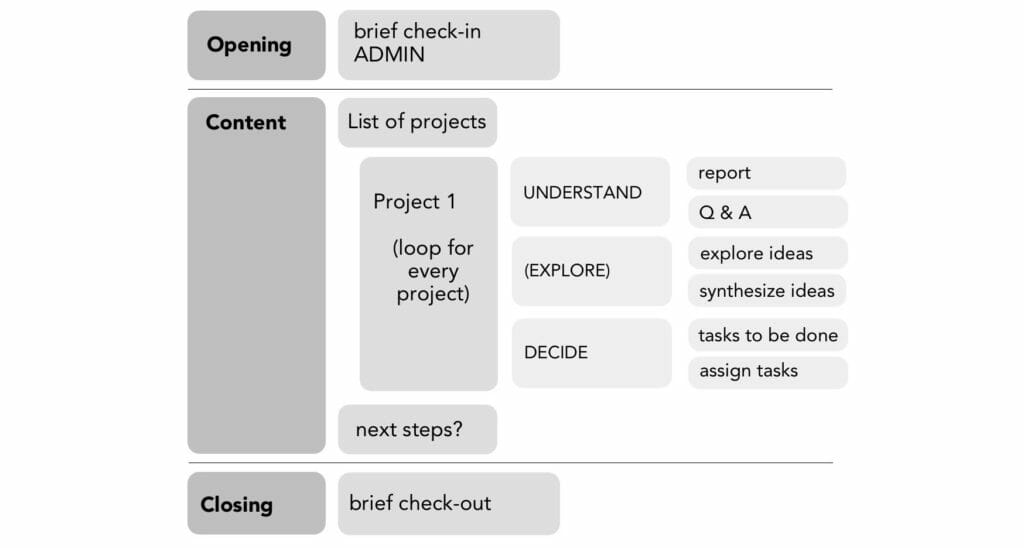
The meeting agenda template improves your meetings instantly! It’s one of the most important sociocracy templates.
You don’t have editing rights – please make a copy to see the template in your drive. Alternatively, you can download it as a docx file.

🆓
Regular meeting template
A simple and light template with all key features for meeting agendas and notes.
🌟
Performance review template
A template for performance reviews following the standards. All prompts are embedded – just copy and begin.
Exclusively part of the Organizational Learners package.
BONUS
Watch this video on how to use the template
Role descriptions templates
Role descriptions help keep clear accountability and ownership.
These templates show you how to be clear without being overly bureaucratic.
The full version also includes standard role descriptions ready to use and tailor to your organization.

🆓
Example role
This template shows you what a role description can look like for operational roles.
🆓
Fill-out role
Ready to define your roles? Fill out this template and you know you’ve covered all areas.
🌟
Standard roles
Role descriptions for standard roles, incl. leader, delegate, facilitator, secretary, logkeeper, General Circle leader, Mission Circle members.
Exclusively part of the Organizational Learners package.
Circle diagrams templates
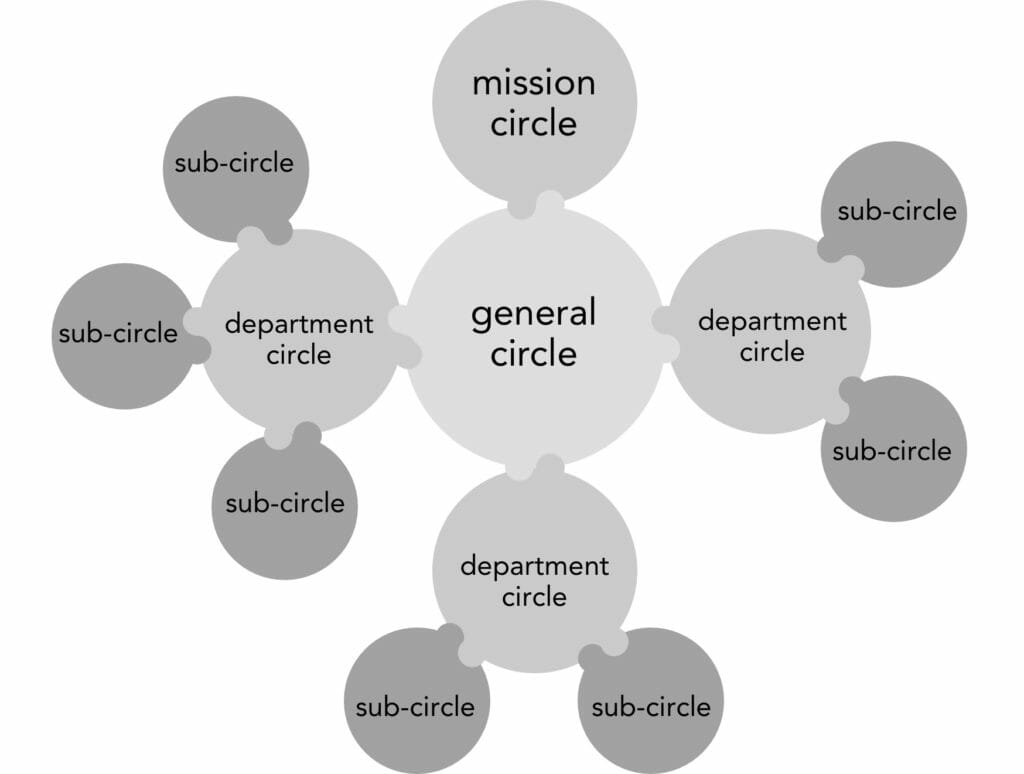
The circle structure gives clarity on who decides what – allowing many decisions to be made in different places.
To draw your own structure, you can work off other organizations’ structures as seen here. In addition, use these resources:

🆓
Example diagrams
We offer the diagrams from the implementation handbook From Here To There for viewing below to give you ideas of what a circle structure might look like.
🆓
Aims/domains table
These aims/domains tables illustrate how a circle structure can define the aims and decision-making domains for each circle to provide more depth to the circle structure
🌟
Step-by-step video
For Organizational Learners, we offer a video-led step-by-step guide.

Exclusively part of the Organizational Learners package.
Onboarding for new members and roles
While the first wave of people is often trained when the implementation happens, over time, new people join and need to be oriented to the governance system.
In addition, people in roles need to be onboarded into their responsibilities – they can’t fill their roles if they don’t know what’s expected of them!
Many organizations create their own onboarding materials. Below you can see materials we have created for organizations to use.

🆓
Free beginner resources
As a free resource, you are welcome to use our free starters or the 19min sociocracy introduction video or the primer in your onboarding.
📘
Books
We have a guide for onboarding in roles that you can purchase and share. We also offer bulk orders starting from 6 copies.
🌟
Role video class
Organizations can use these 30min on-demand video classes to train their new role-holders and give them the chance to shine!
Exclusively part of the Organizational Learners package.
Governance agreements and bylaws
Governance agreements spell out the “rules of the game” and are therefore essential for shifting the power into the collective for real.
In this section, you can find samples that other groups used.
Note that, of course, we cannot give legal advice outside of a formalized client relationship.

🆓
Governance Agreement
Our own governance agreement shows you what needs to be defined to cover all essential areas.
🌟
Other governance policies and bylaws
NGO bylaws and governance agreement – Coop bylaws – Coho governance agreement
Exclusively part of the Organizational Learners package.
IT tools for sociocracy
IT tools can support sociocracy implementations, for example by:
- a transparent listing of aims, domains and roles in each circle
- policy manuals and automatic reminders for term ends and version control
- meeting notes
While we in Sociocracy For All use tools like peerdom and google docs ourselves, we know that there are no standard solutions because all needs are different and the available tools keep changing.
That’s why we opt for making the existing tools visible on our page on IT tools for sociocracy.

Find a consultant for support in implementing sociocracy.