Language:
Sociocracy combines consent decision-making, a decentralized system of authority and intentional processes to improve our decisions and processes over time into a governance system that supports effective and efficient process while increasing connection, listening and co-creation among members.
Sociocracy is used in businesses, communities, nonprofits, cooperatives, grassroots groups and in education. See the sociocracy resources on this page to get started.
Go one step deeper:
We have options for all learning styles and schedules:
Read in our free eBook
“Just give me something to read”
Download the free ebook and learn more! The eBook covers the basic aspects and tools of sociocracy – perfect for people who want to read to get a fairly comprehensive overview.
Monthly free info sessions
“I want to talk to a real human being.”
Our free info sessions give you an overview within 60min. They are taught by advanced students and have time for your questions. They happen once a month.

Primer: Learn on your own
“I need something engaging on my own time”
Too busy for a date in your calendar? Learn on your own time with our Primer – a 75min video series. Includes links to examples and deeper reading. Start anytime.

Books from Sociocracy for All
Many Voices One Song
The practical sociocracy handbook written by the co-founders of Sociocracy For All. 300 pages full of real-life support!
Who Decides Who Decides?
How to start a group so everyone can have a voice!
Let’s Decide Together
The definitive guidebook for practicing sociocracy with children. Children can decide with sociocracy too!
Sociocracy topics
Each of these short summaries gives you an overview of the sociocracy resources for you to learn more.




More: Selection process | Writing proposals | Implementation
Making group decisions: consent
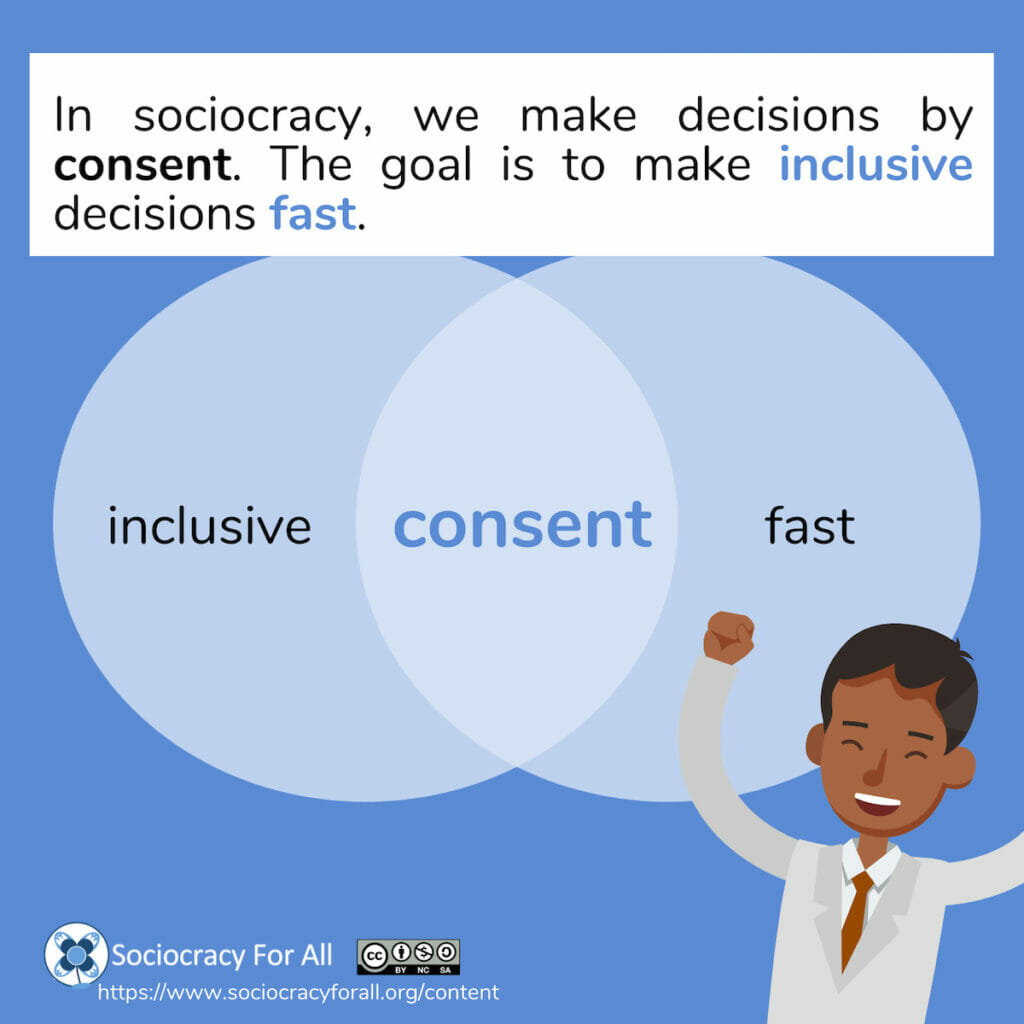
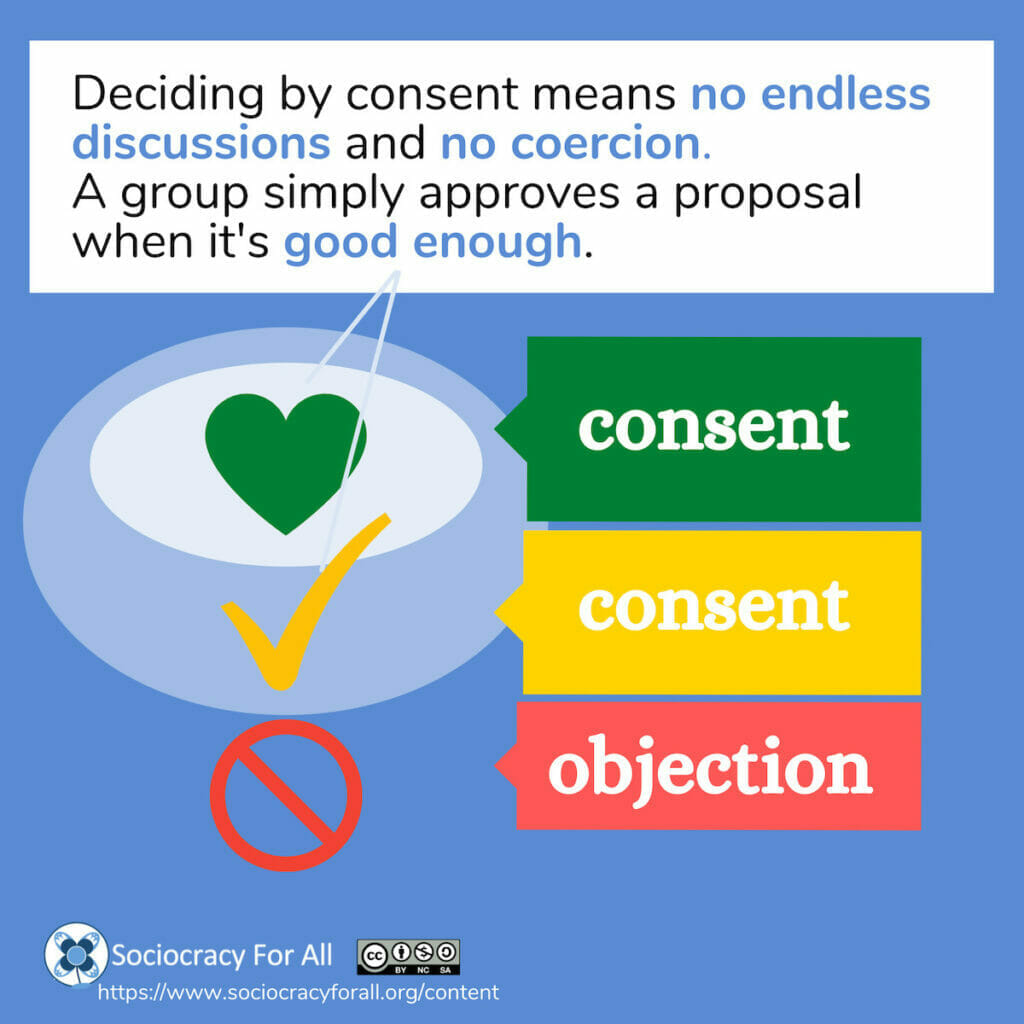
Consent is the default decision-making method in sociocracy. In consent, a decision is made when no circle member has an objection. Every person will consent if they can accept the proposal, and object if the proposal has negative implications with respect to the circle’s shared aim.
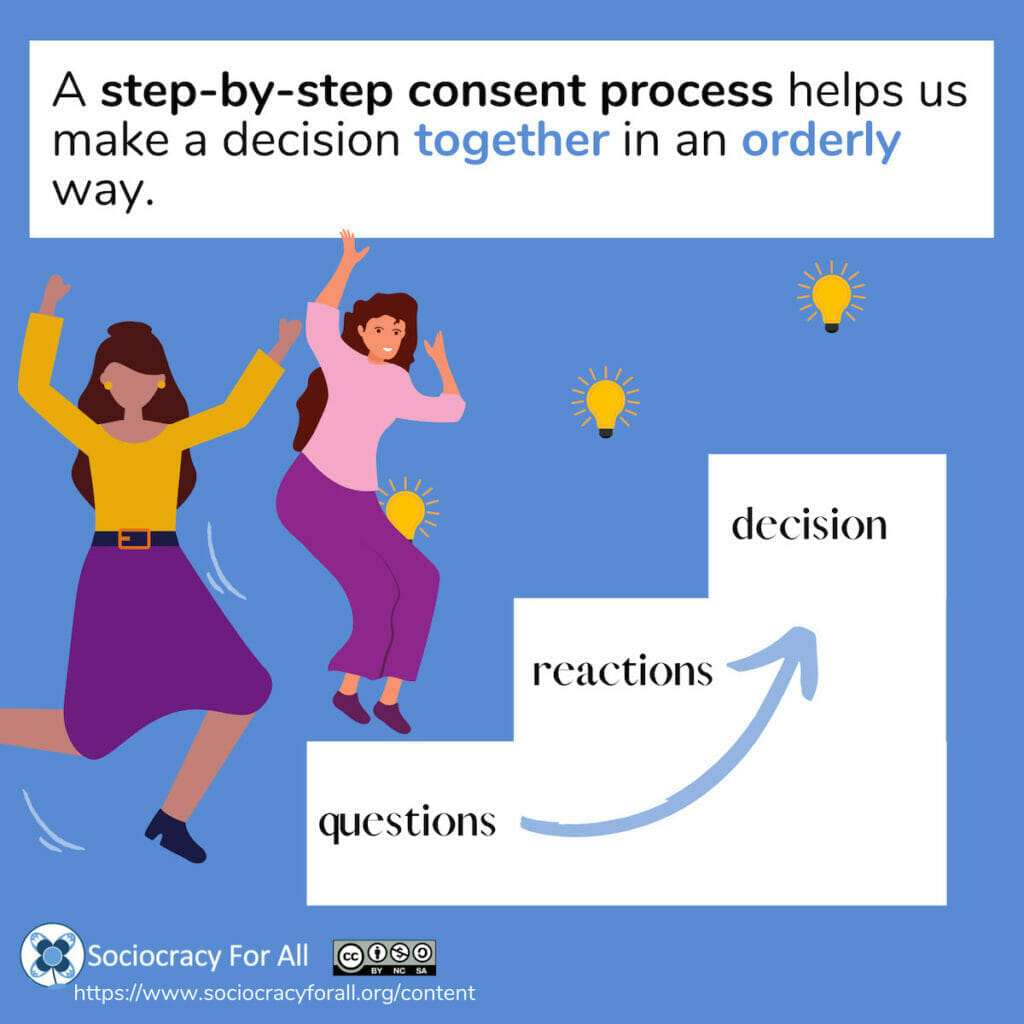
A group moves to consent in the consent process: presenting the proposal and clarifying questions, quick reactions and a round of consent/objections.
Different from blocking a proposal in consensus decision-making, objections are welcomed as valuable information and they can be integrated by modifying the proposal, its term or its measurements.
Explore the language of consent.
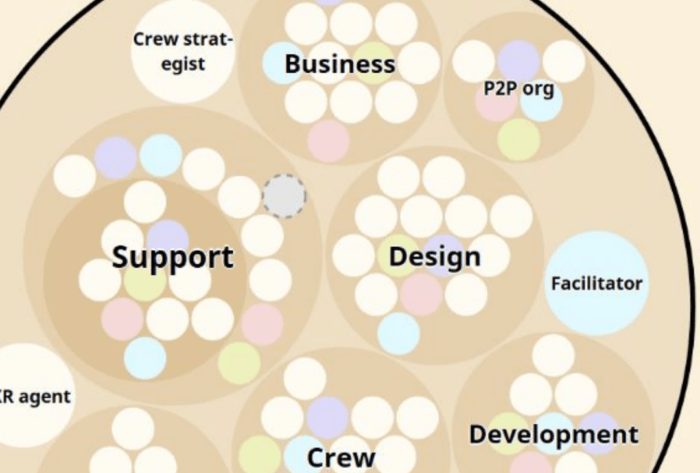
Deepen your understanding by viewing the Visual Thesaurus map for Consent

Circles and roles: who decides what?
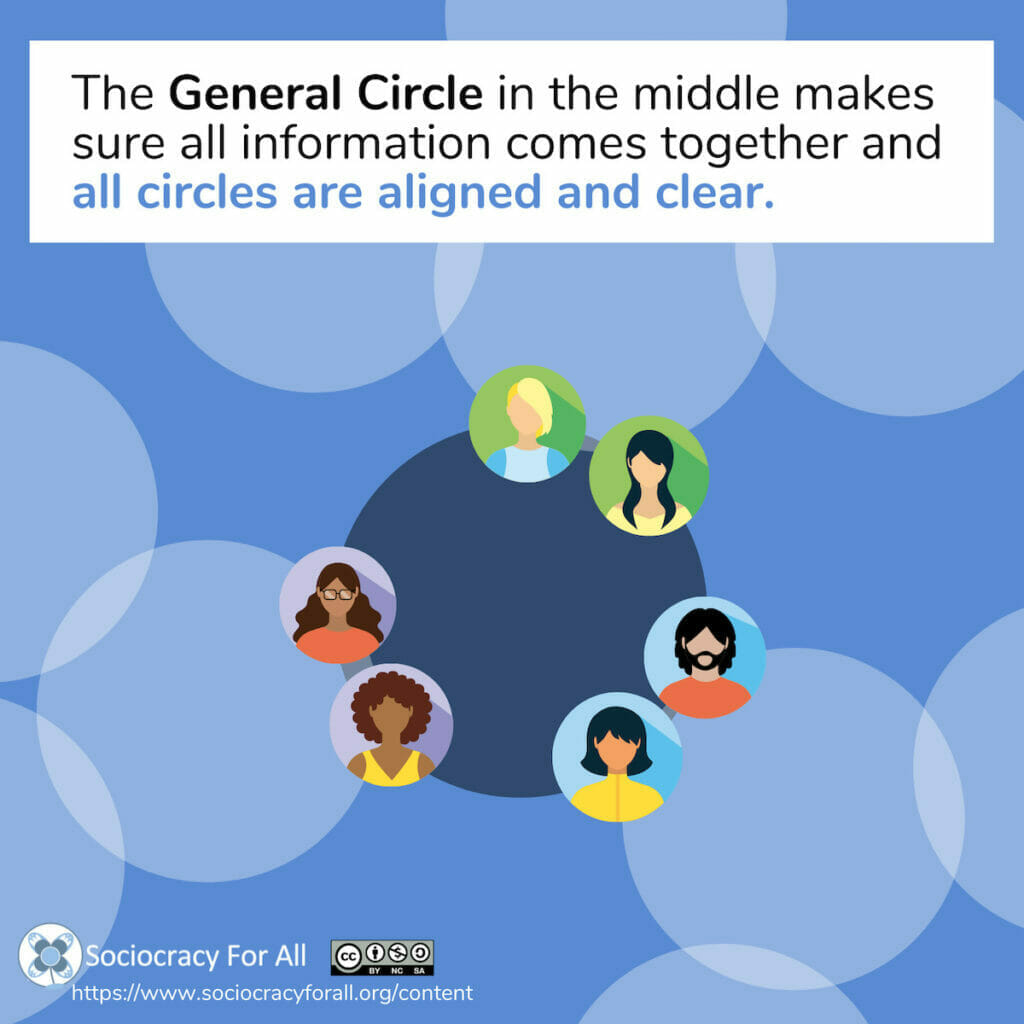
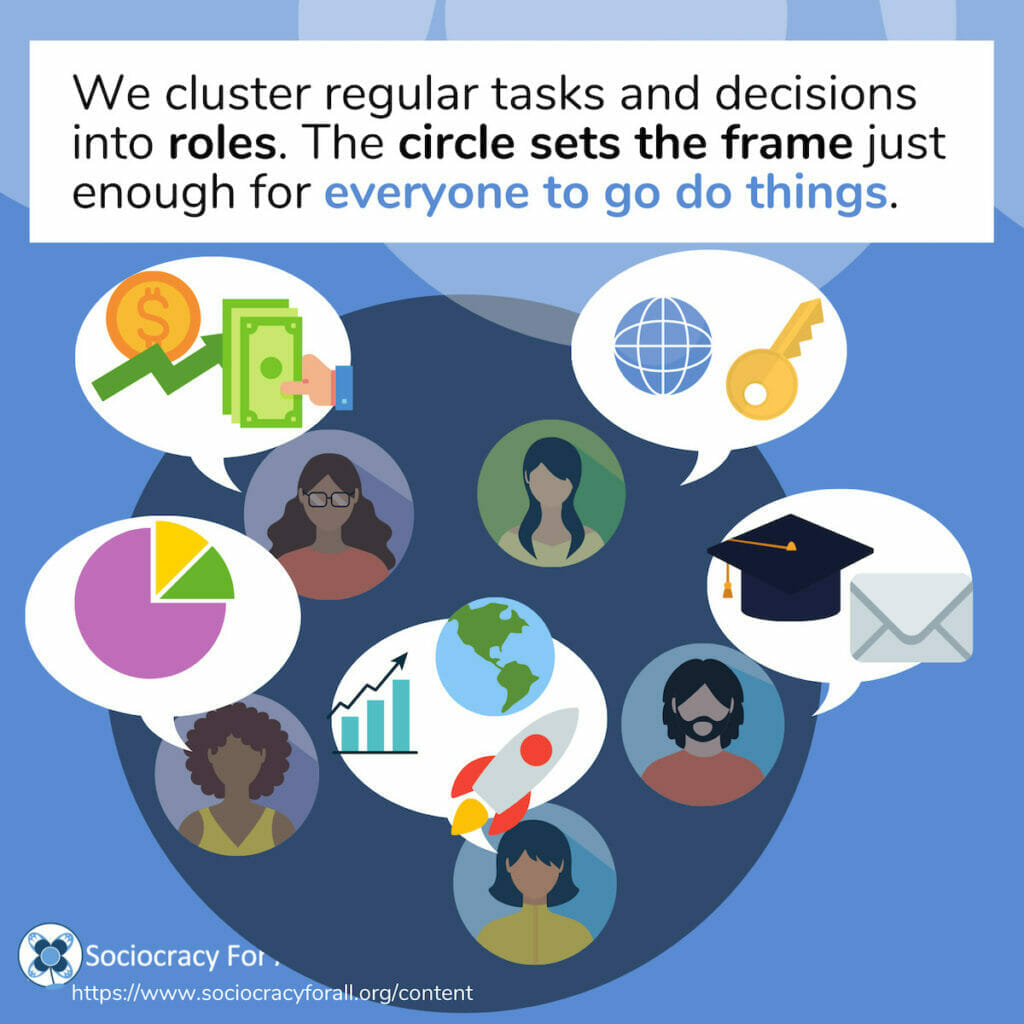
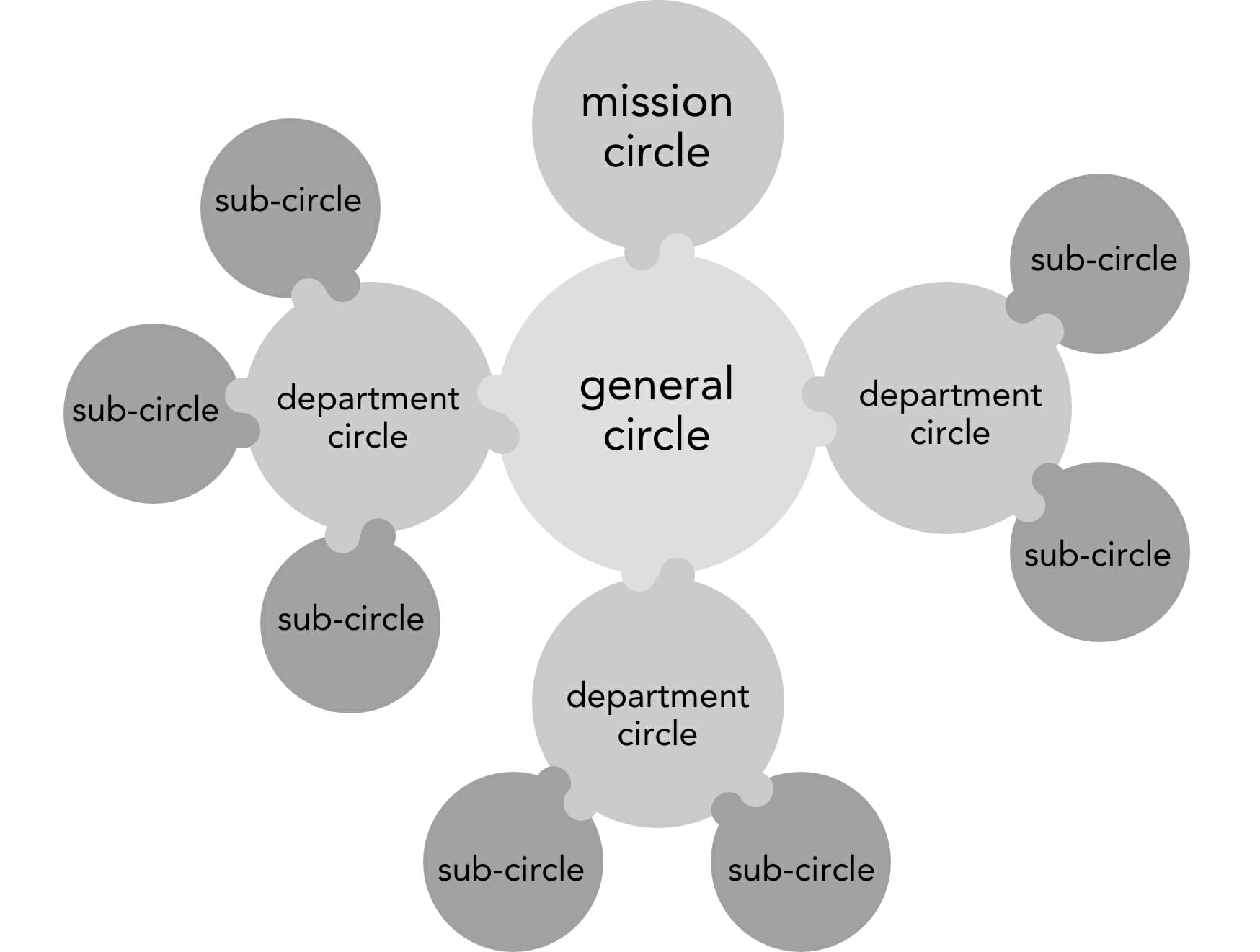
Decisions are made in circles, a defined team of people working together towards their circle’s aim. Circle members make collective policy decisions in their domain and they define operational roles to empower individuals to take on responsibility and circle roles to self-manage their circle.
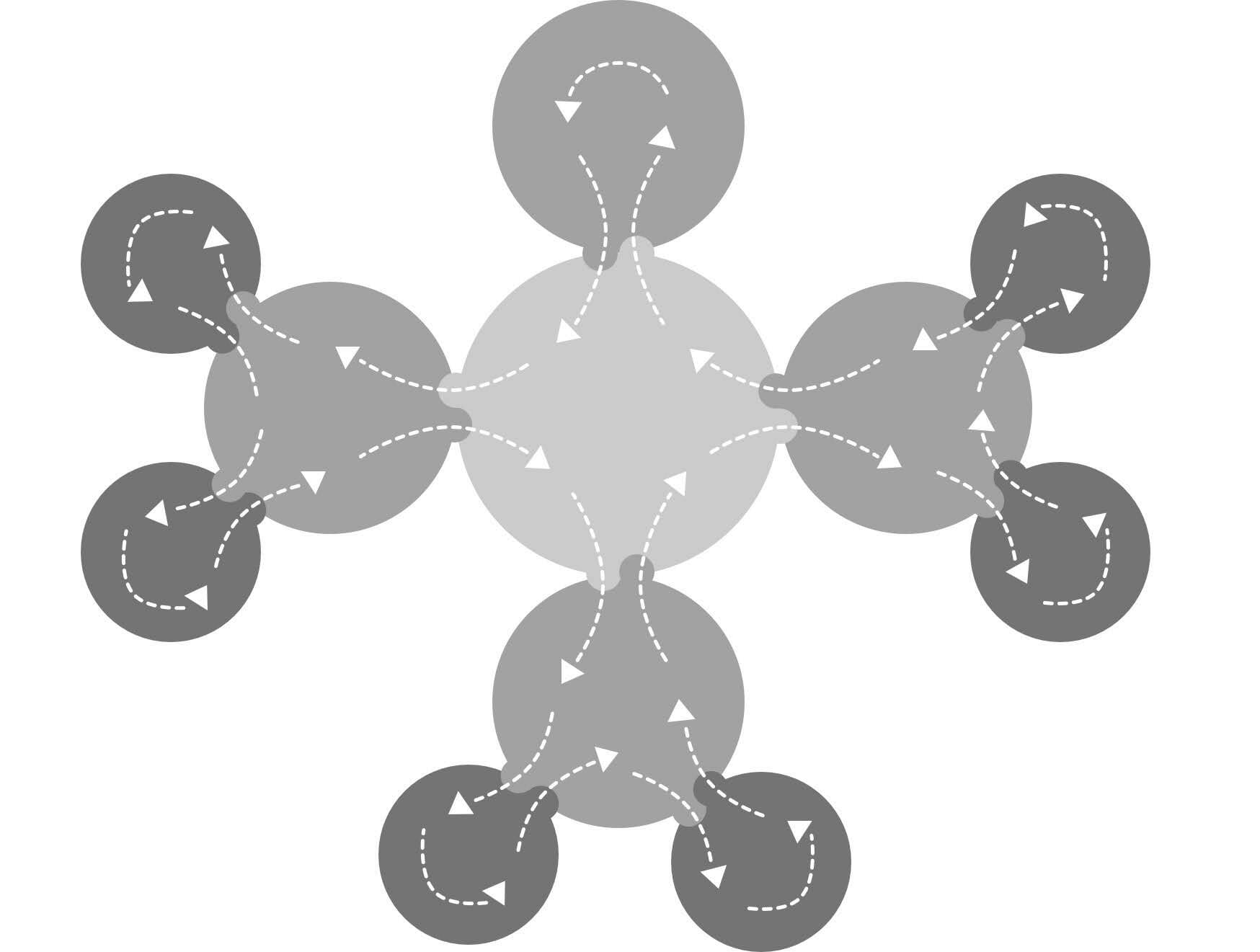
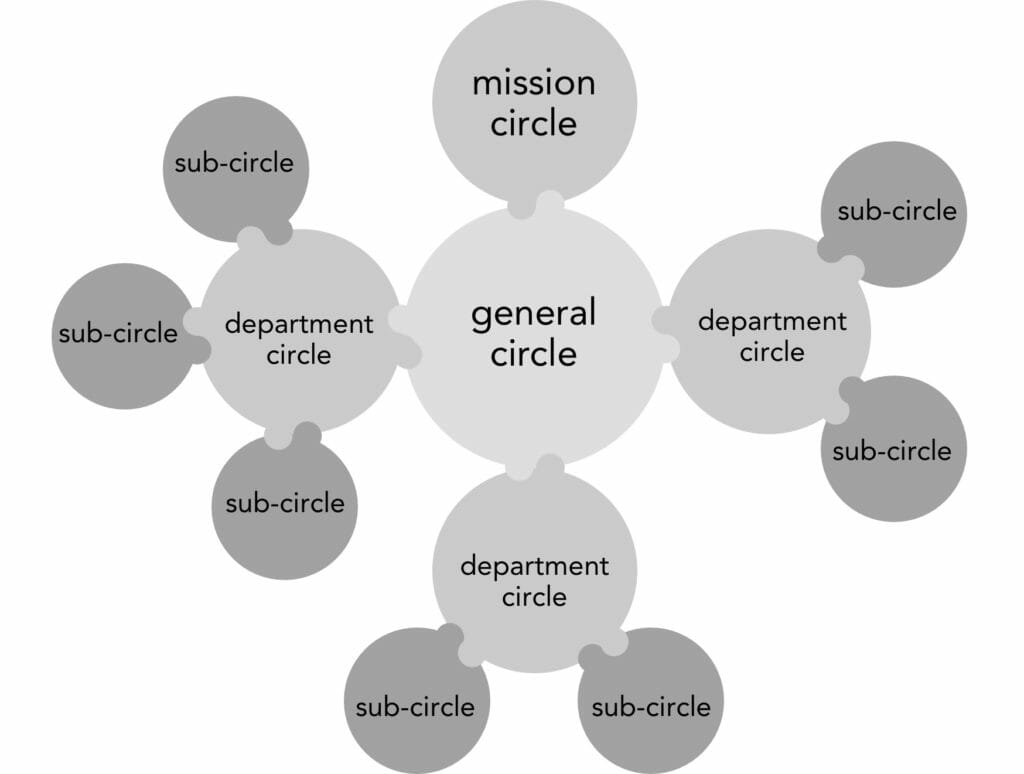
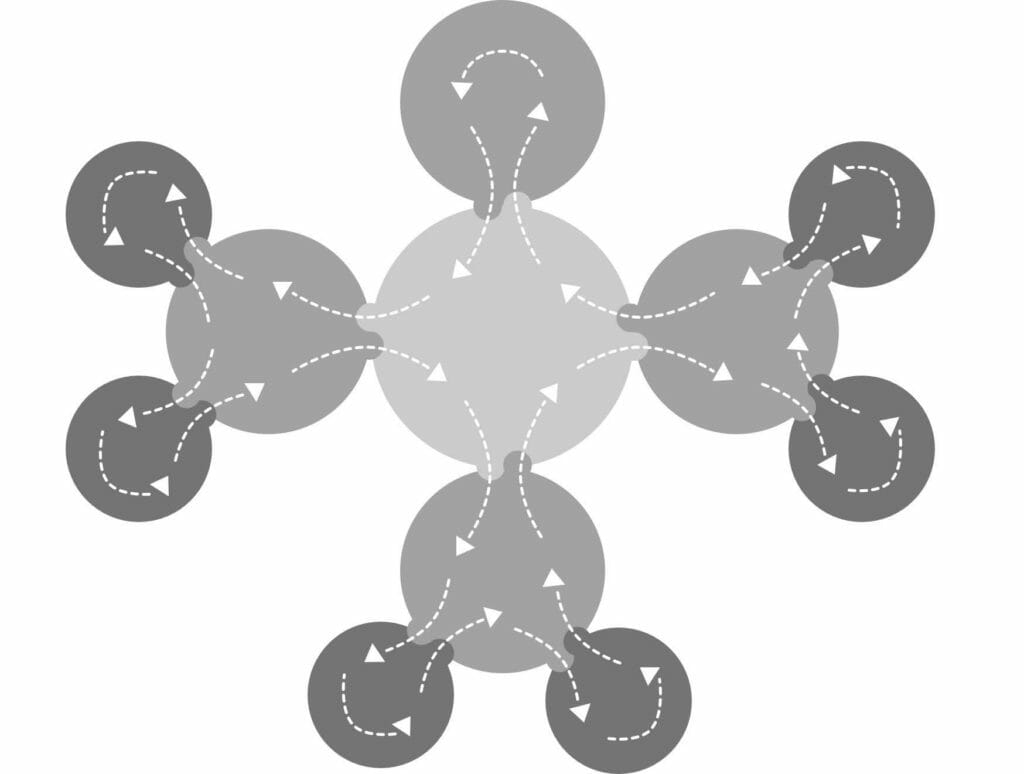
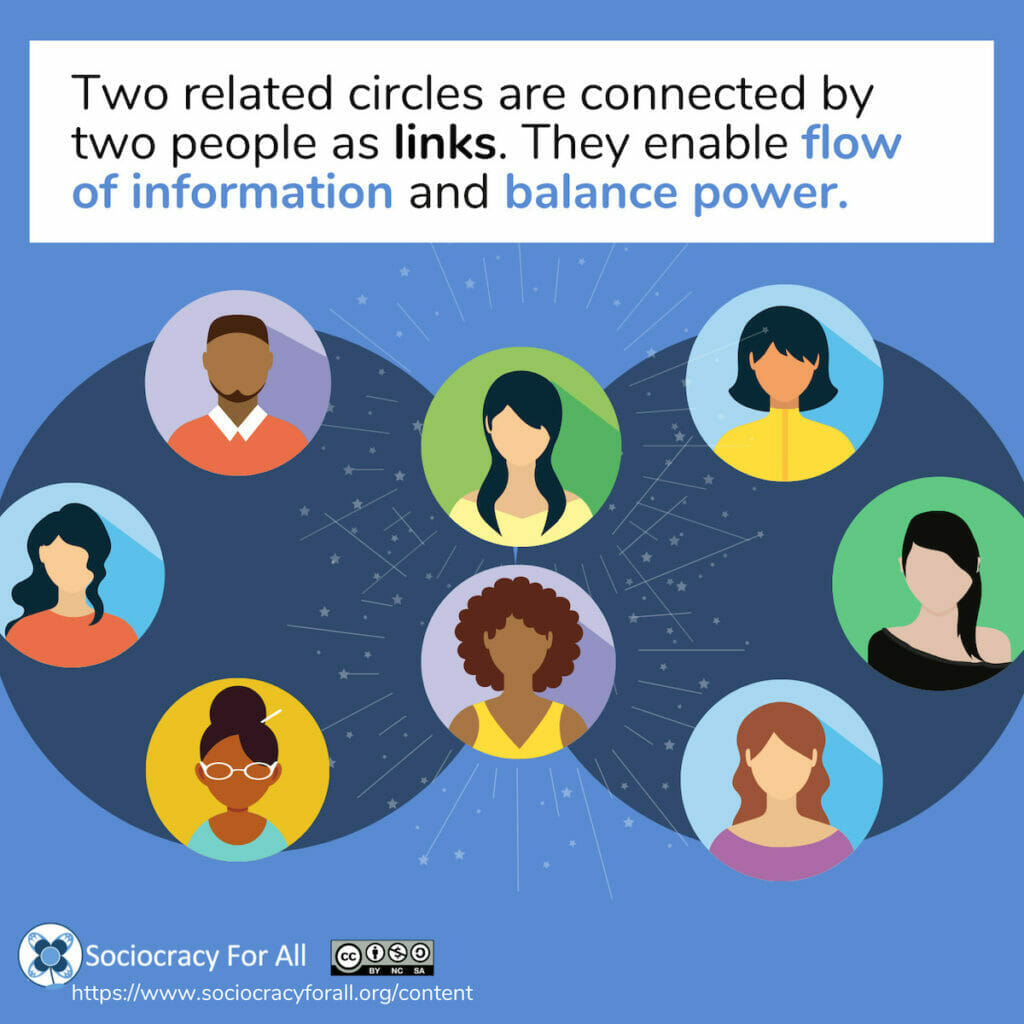
Circles are connected through parent circle/sub-circle relationships of nested domains, leading to a system where everything can be decided locally in the system, without centralizing power at the center. To make sure two circles are connected, we double-link them with two people as members in both circles.
Sociocracy resources on structure: Overview article on structure
Explore the language of circles and roles.
Deepen your understanding by viewing the Visual Thesaurus map for circles and roles.
Meetings with sociocracy

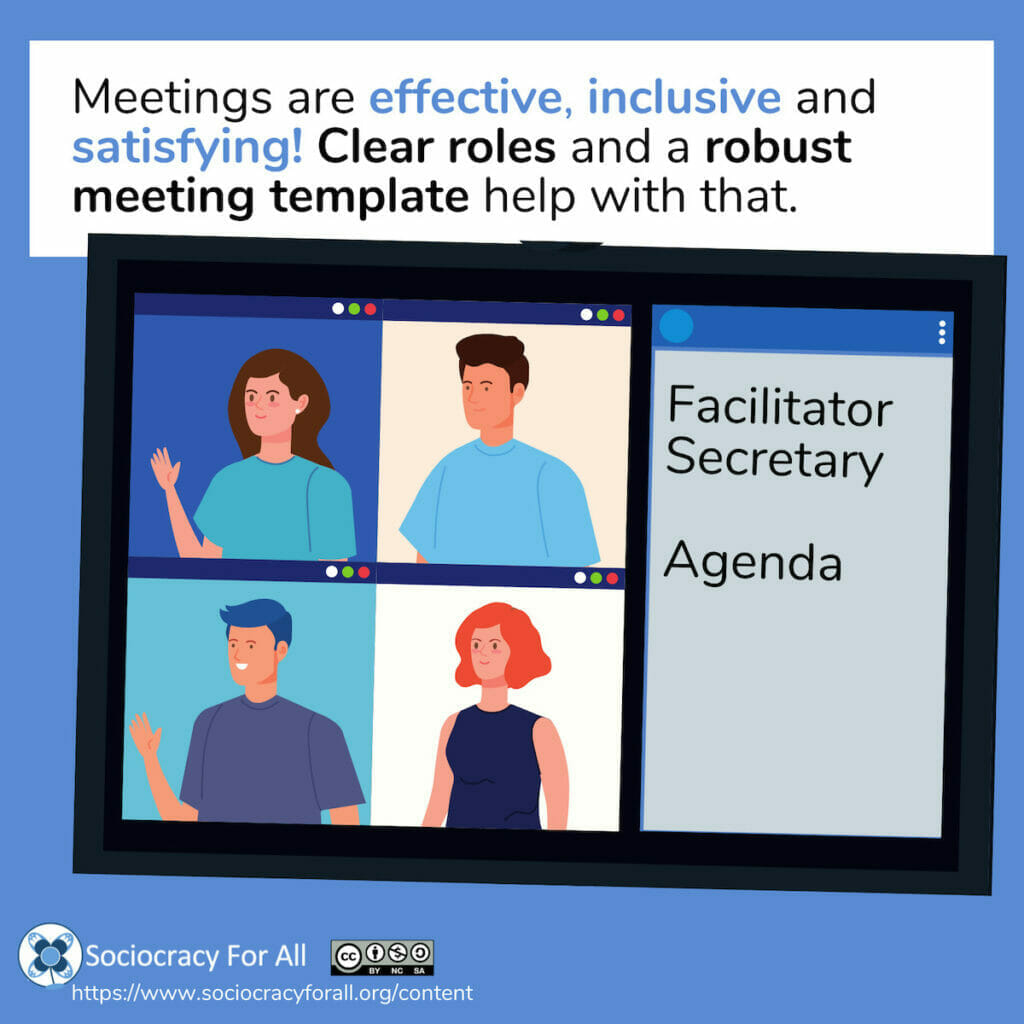
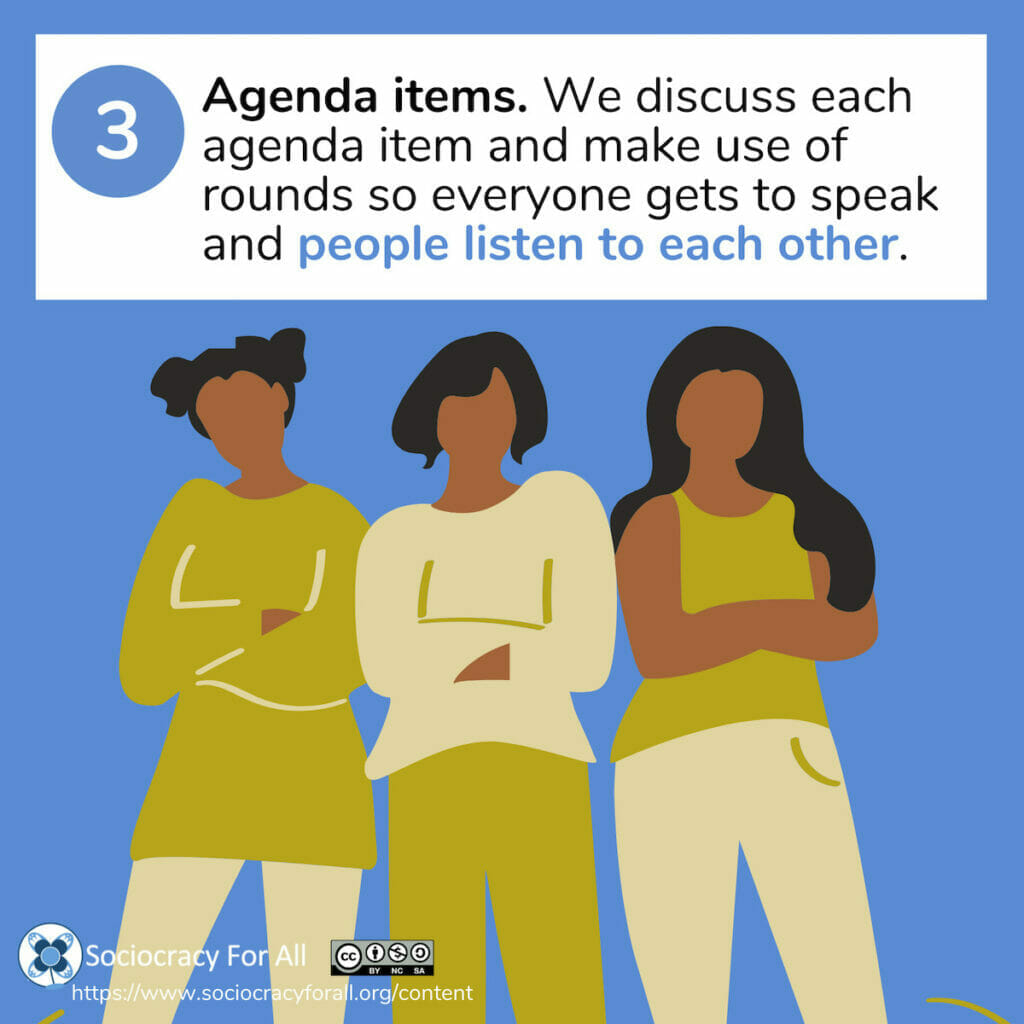
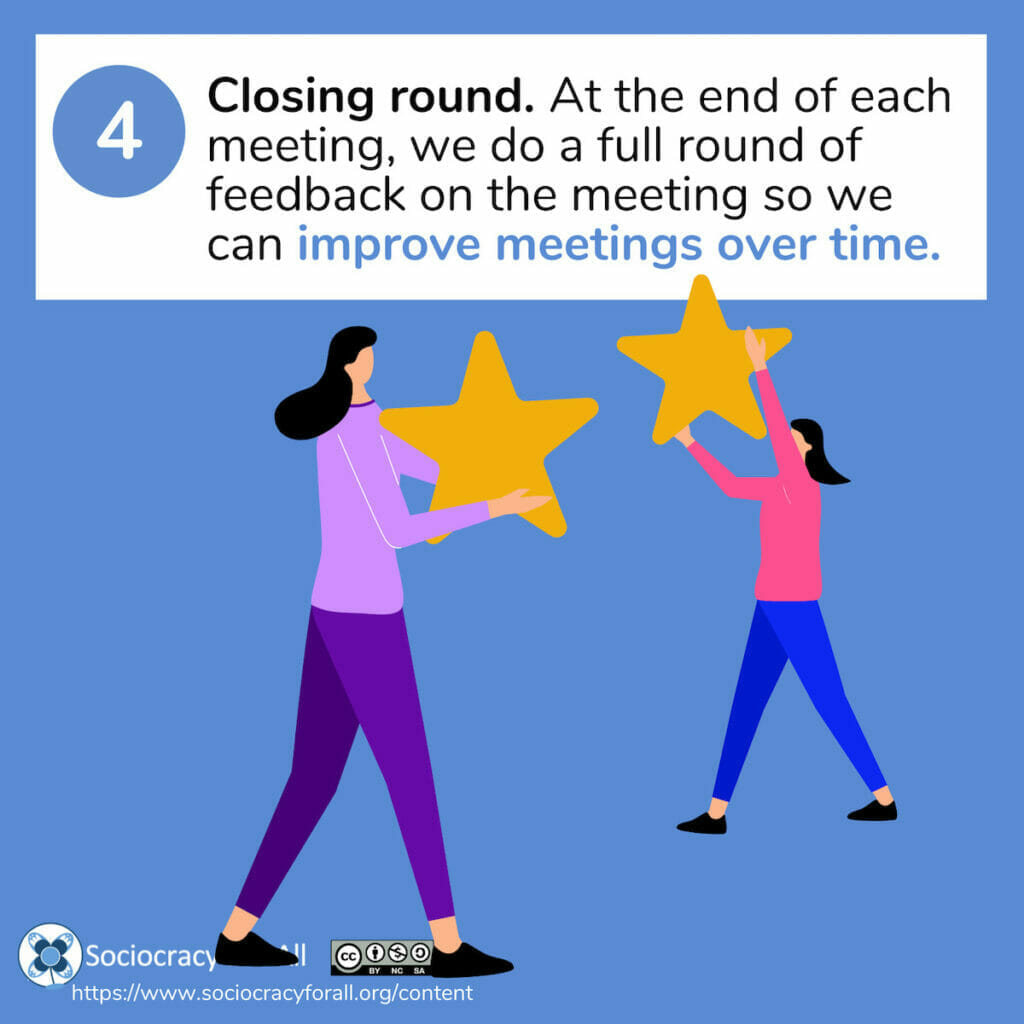
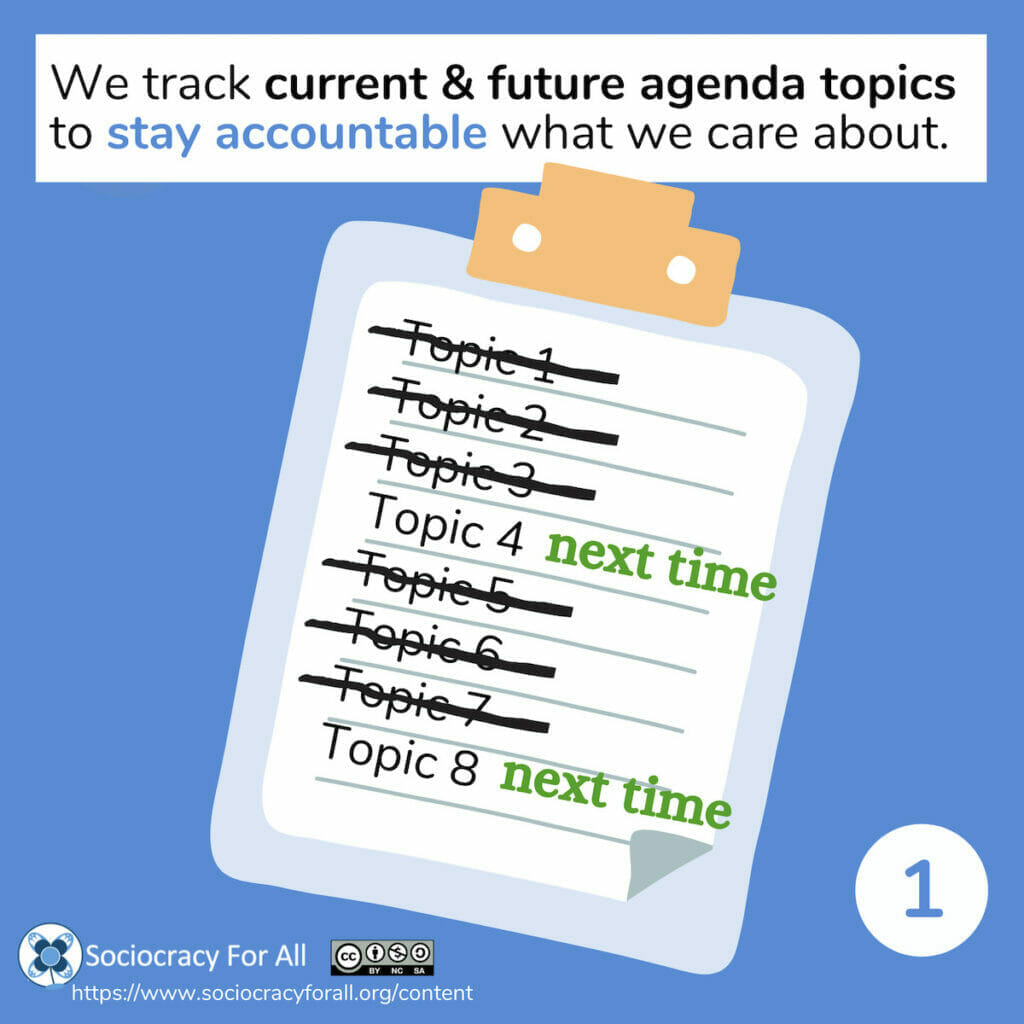
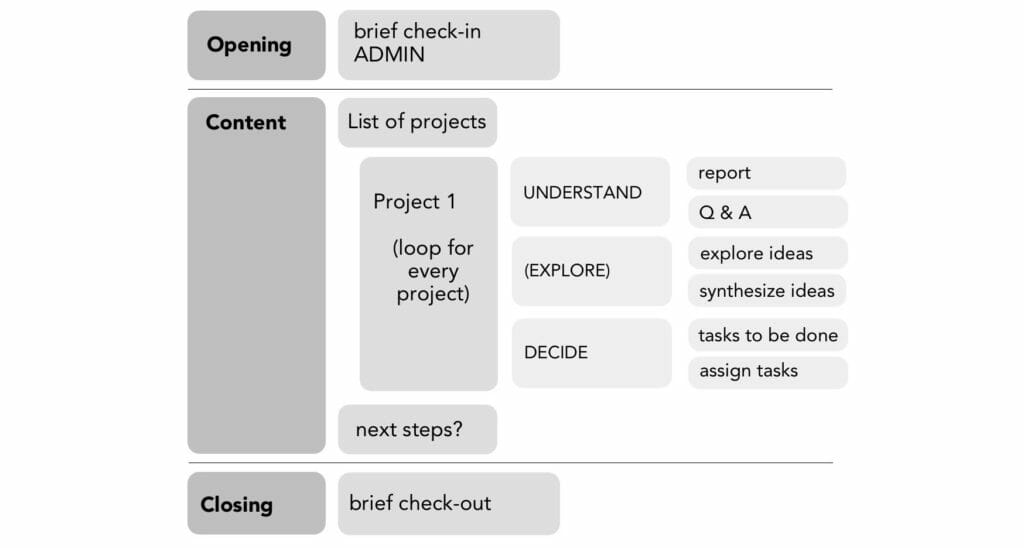
Sociocratic meetings are inclusive and efficient with a clear format:
- Opening: check-in and ADMIN
- Content of the meeting
- Consent to agenda
- Agenda items
- Review
- Check-out (meeting evaluation)
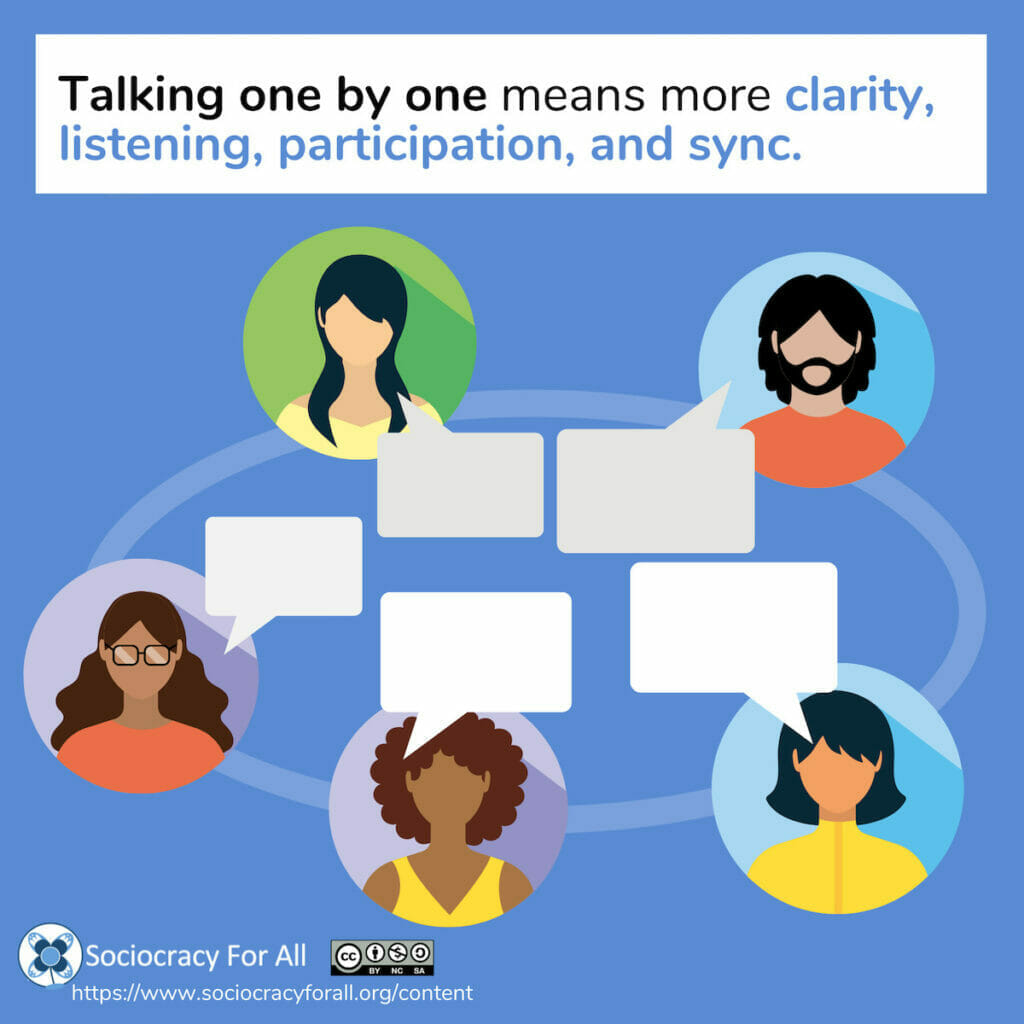
Facilitation is a focus of sociocracy. Rounds – the practice of speaking one by one – are commonly used in meetings to keep equivalence and focus. Rounds also make it easy to run virtual meetings in video calls.
Explore the language of sociocratic meetings.
Deepen your understanding by viewing the Visual Thesaurus map for sociocratic meetings.

Performance

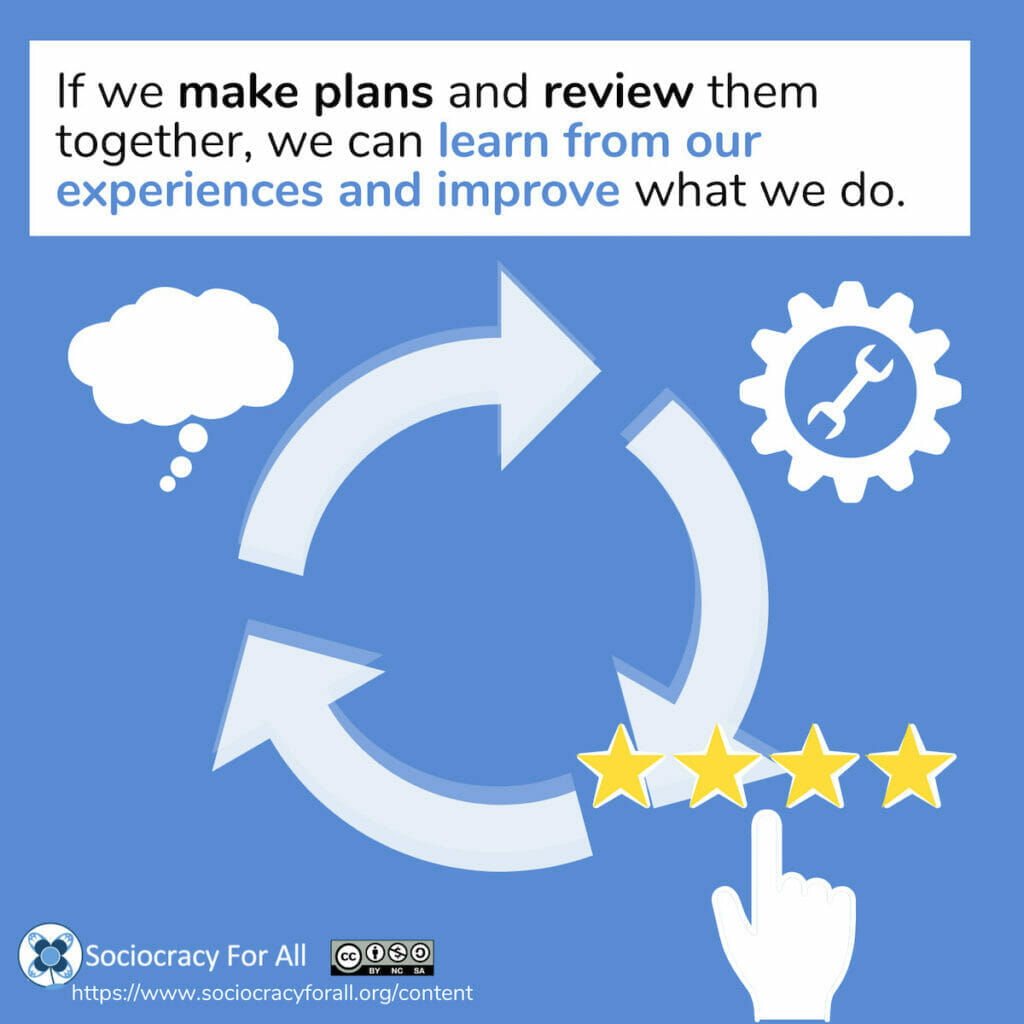
All sociocratic processes are built on the basic idea of continuous improvement. Feedback is a way to improve what we do, both by creating feedback-rich organizations, a commitment to interpersonal feedback and formal, peer-oriented performance reviews. Other practices are: meeting evaluations in meetings, reviews for all policy decisions and for role selections.
Leadership in sociocracy is peer-oriented and based on accountability to own commitments and to the circle. Many people also combine sociocracy with restorative justice or Nonviolent Communication to align their practice with their values and to improve their effectiveness and communication.
Explore the language of performance.
Deepen your understanding by viewing the Visual Thesaurus map for feedback and improvement.
Selection process
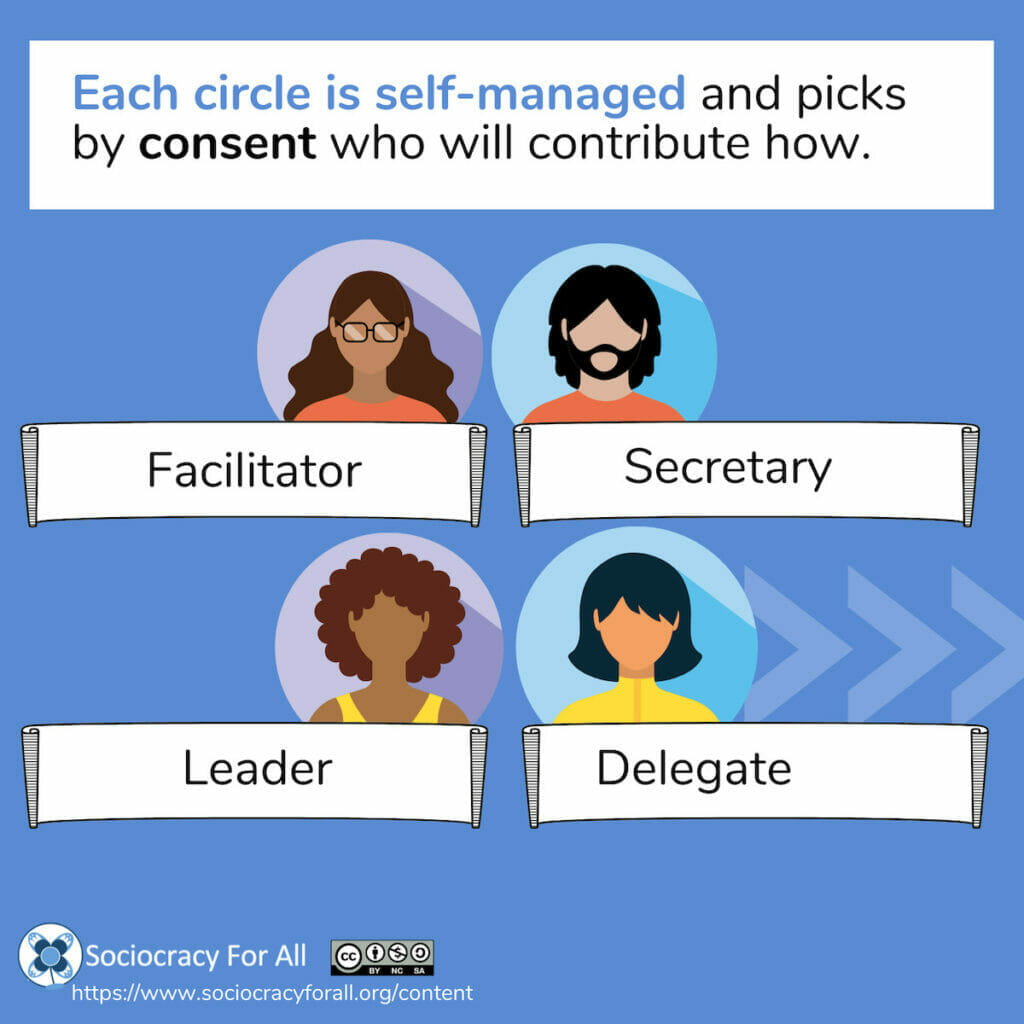
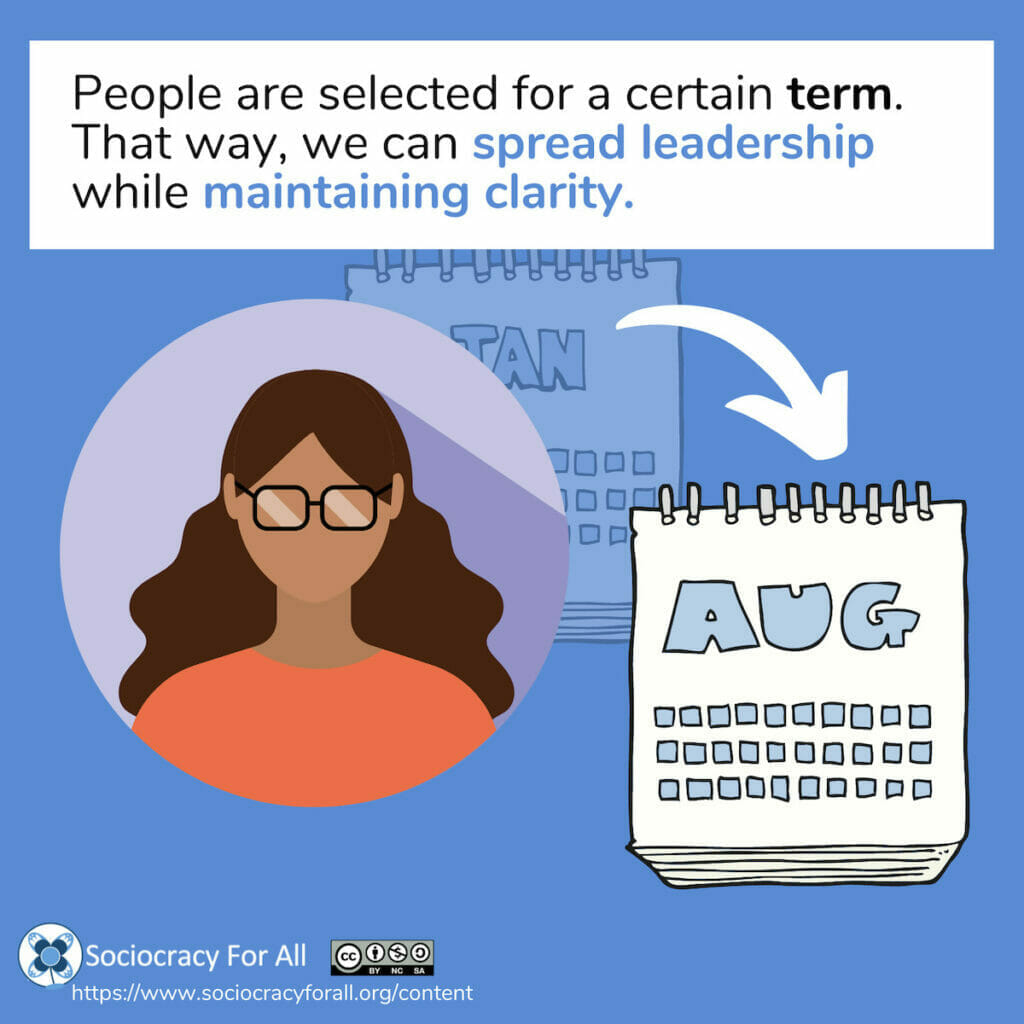
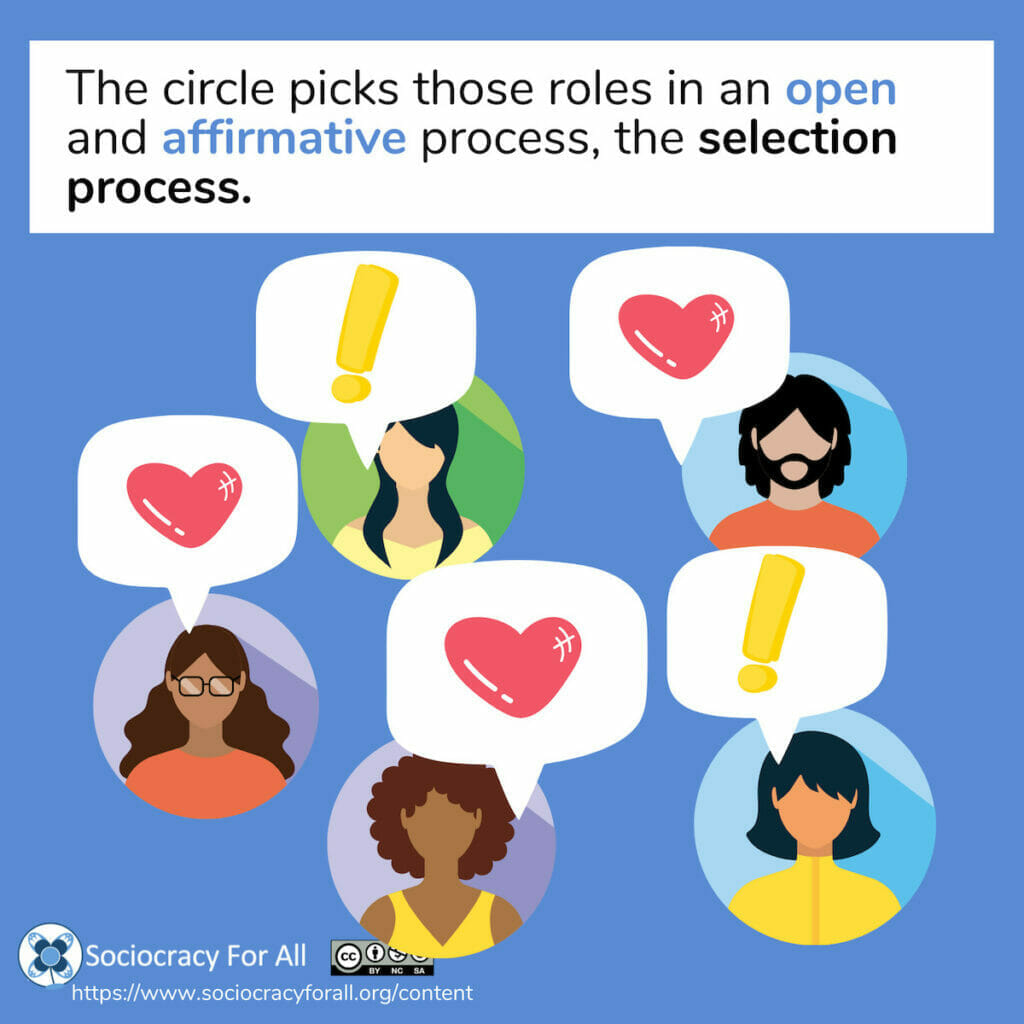
A sociocratic circle chooses together who will fill an operational or circle role. The most common process to choose that person is the selection process with nominations, change round and consent.
Explore the language of the selection process.
Deepen your understanding by viewing the Visual Thesaurus map for selection process.
Ready to learn?
More sociocracy resources: articles and videos
-

Sociocracy: The Worker Co-op Operating System
Language: Español Sociocracy: The Worker Co-op Operating System (By John McNamara. Originally posted on workersparadise.) Over the last couple of years, I have had the incredible opportunity to work with Sociocracy For All (SoFA). This organization has worked diligently to bring the concepts of sociocracy out of the “best kept secret” category and into the mainstream of…
-
Peer-to-Peer Governance in a for-profit organization
Design company. The new processes were introduced gradually.
-
Sociocratic Governance in Unicorn Grocery Co-op
Language: Español What is Unicorn Grocery? Unicorn Grocery is a thriving worker-owned, values-driven grocery co-op using sociocracy for its governance in Chorlton, Manchester, UK. They consist of 71 members who all work within the cooperative and are also the directors of the business. Unicorn Grovery at a glance; Twice named the nation’s ‘Best Food Retailer…
-
3 common struggles in sociocratic organizations
Language: Español Governance is never complete and “done”. It needs constant maintenance and fine-tuning. To help you prevent challenges or yo get you past them if you’re already experiencing them, I am sharing with you the three most typical struggles in sociocratic organizations. If you have decided to or already implemented sociocracy or parts of…
-
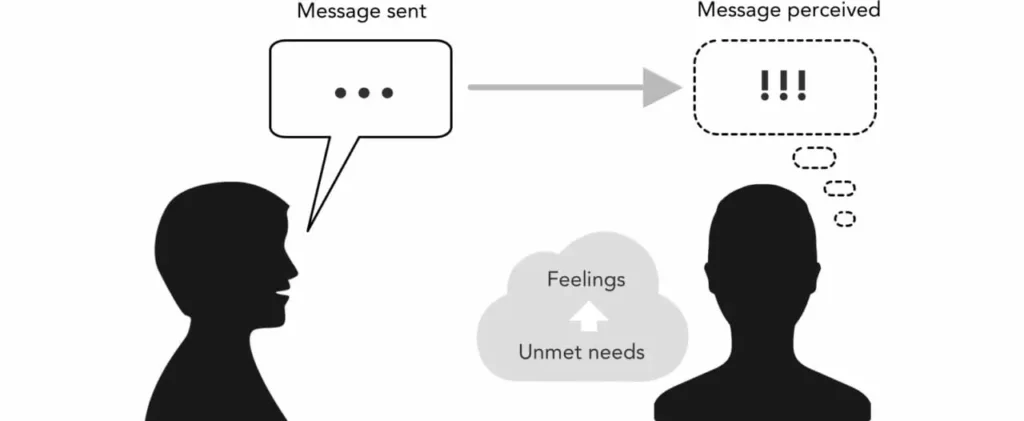
On interpersonal feedback
Language: Español There is no right and wrong Many people are afraid of feedback. “Can I give you some feedback?” is typically followed by criticism, and we don’t do well with criticism. When we face criticism, the most typical reaction is to shut down, get reactive, defensive or withdraw. If you want your feedback to…
-
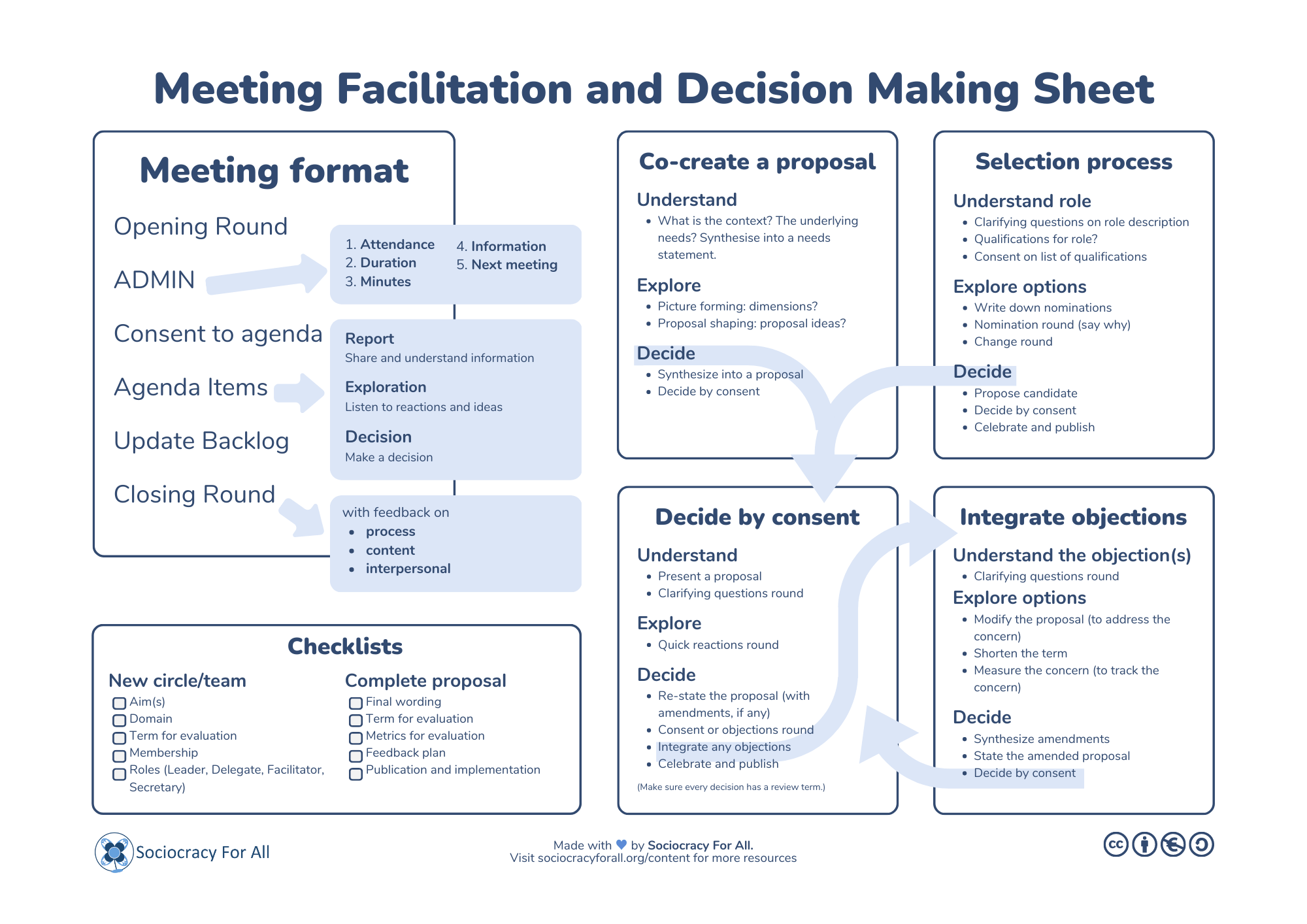
Sociocracy Facilitation Sheet for Better Meetings
Have you ever felt stuck in a meeting? This downloadable cheat sheet for facilitators has all of the key components of sociocratic facilitation on one page!
-
A case study of a community-based research program: The Hawai’i Partnership for Climate-Smart Commodities
This article explores the ambitious implementation of sociocracy within the Hawai’i Partnership for Climate-Smart Commodities Program (HiCSC), an initiative funded by the United States Department of Agriculture’s Climate Smart Commodities Program involving a broad consortium of university academic and community-based organizations across Hawai’i.
-
ArboLife
Arbolife was founded by Morli and Marc Mathys because they wanted to take a road to better care about themselves and the planet.
-
Experiments with The Ready
Ashley Reid Smith | Sep 29th, 16:00 – 16:20 UTC.
-
Sociocracia en la Nueva Era (Diego Cuadra)
Diego Cuadra. Estamos viviendo tiempos extraordinarios, tiempos de grandes cambios. Muchas tradiciones y pueblos, Hindúes, Incas, Mayas, Mapuches, muchos pueblos nativos americanos, Judíos y también está escrito en la Biblia, han hablado durante siglos del término de un gran ciclo y el inicio de otro de mayor armonía y paz. Hoy en tiempos de Cornonavirus…
-
Selection process
Language: Español In this article: What is the sociocratic selections process? One of the richest processes in sociocracy, the selection process is sociocracy’s tool for electing people into leadership and other roles, known as the sociocratic selection process. It is also the process that diverges most from what we are used to doing. There are…
-
Sociocracy on a network of eco-villages: Casa Latina
Casa Latina is the Latin American part of the Global Ecovillage Network, an association of ecovillages